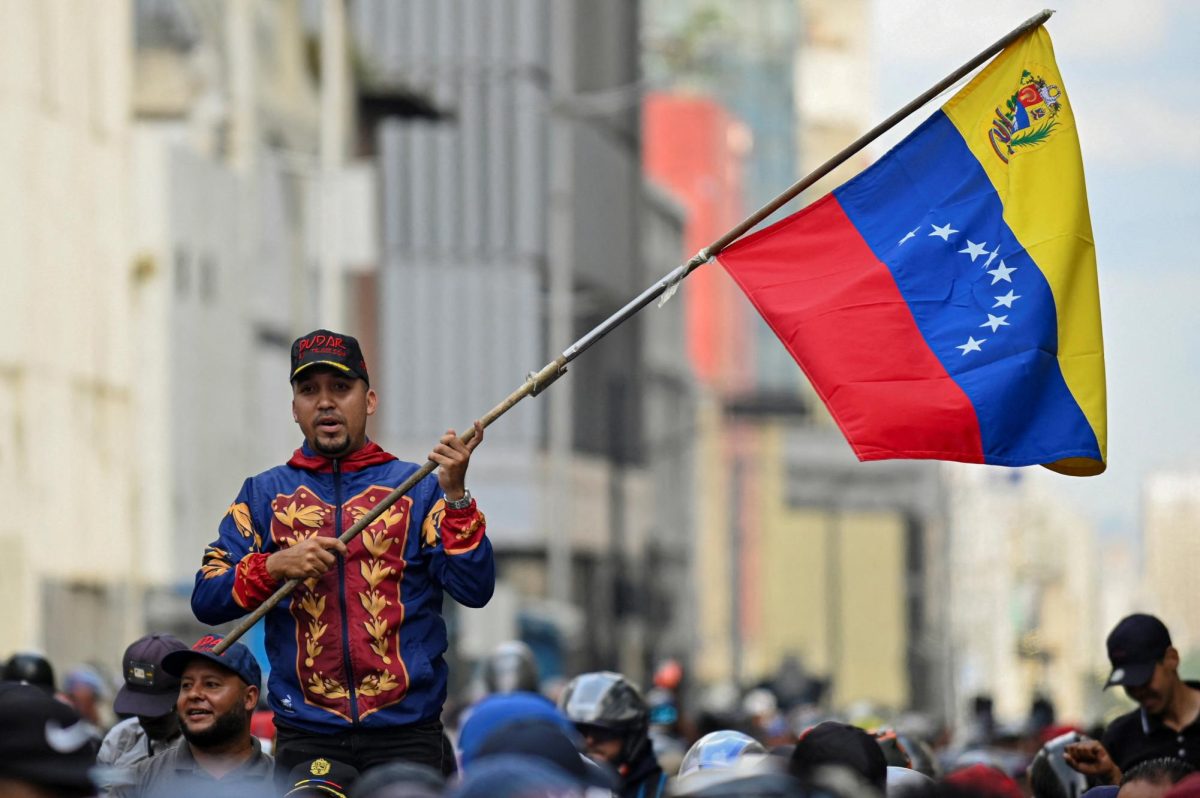
Many believe that American conflict with Venezuela began in recent years, but in reality tension between the two countries can date back over 100 years. In 1912, geologists in northwestern Venezuela struck oil, while later having a high production increase in the 1920s under the dictatorship of General Juan Vicente Gómez.
American and European oil companies rapidly entered the market to explore, extract, and export what seemed like endless amounts of crude. By 1929, Venezuela had gone from an agricultural economy to the world’s second largest oil producer, behind the US.
American Oil companies controlled 99% of oil during Gómez’s time in office, building refineries and exporting about 137 million barrels annually. Although The Great Depression hit and cut Venezuelan oil exports 20%, the US firms continued dominating; holding a significant influence over the Venezuelan oil industry, according to Cambridge.org
In the early 1970s, worldwide oil prices saw a dramatic increase. Then in January of 1976, President Carlos Andrés Pérez nationalized all of the oil industry, asserting economic independence and reducing foreign investment. After using countries like the U.S. to explore, pump, refine, and sell their oil, a new state company was created known as PDVSA. This is the beginning of the downfall of the Venezuela we know today.
During this period, Venezuela also suffered from corruption and lawlessness, with criminal organizations gaining power, including groups later tied to international drug trafficking that affected the U.S. market and risked lives.
While nationalizing (taking) foreign held assets sounds like a good idea for countries to gain independence, this was not the case for Venezuela. Corruption would follow and life in Venezuela declined dramatically. In the decades following 1976, Venezuela’s oil production decreased as American companies were no longer maintaining and modernizing oil production facilities in Venezuela.
The people in Venezuela suffered while leadership enjoyed a lavish lifestyle. Corrupt leaders also supported drug lords, allowing them to produce and export large quantities of drugs, some of which ended up in the United States. Venezuelans were starving to death and many ended up finding refuge in other countries such as Columbia, Brazil and the United States.
President Donald Trump is well known for his crackdown on illegal immigration and has taken a hard stance on countries who are in opposition to his efforts in stopping drug trafficking. In addition, recent presidents have both put a reward for Nicolas Maduro’s capture, acknowledging that Maduro lost his 2019 bid for reelection but refused to leave office.
President Trump tried negotiating with this corrupt leader, offering for him to leave on his own and live his life peacefully in another country. Unfortunately, Maduro chose to stay and told President Trump that he would have to come get him himself.
Nicolas Maduro was captured by United States forces on January 3rd, 2026. Taking place in Caracas, Venezuela, Operation Absolute Resolve took action at 2:01 AM local time. It was a precise mission that minimized loss of life and removed Maduro from the country to stand trial in the U.S. for drugs and weapons charges.