
Lights go dim. The curtain rises. Everyone is in place. The audience in SJHHS’ theatre is antsy with anticipation, finally starting to quiet down. Actors rehearse lines in their mind, ready to give their show their all. But how do they get there?
There is much more to a production than memorizing lines and entrance cues. Every aspect of the stage and even theater is manipulated for the production. From the smallest prop to the largest backdrop,the production is shaped and viewer experience is enhanced. What actually goes on to get the stage and actors ready for opening night?
Long hours go into the setting of the stage. Paint colors set the mood, lighting guides emotion, and sound systems ensure every word muttered or yelled by actors is heard. These are crucial parts of a production that go unnoticed. Behind the curtain hides the hard work, creativity, and dedication that makes the show a must see.
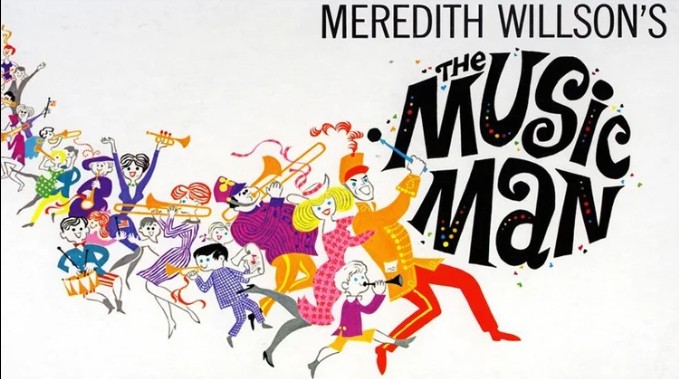
Auditions were the first step for upcoming spring musical, Music Man. The auditions consisted of dancing and singing. For students who audition they chose a monologue and song that suits the style of the show. If it is a difficult show with a weird writing style, the directors provide a song and monologue for the students. The students who try out also work with other actors.
For musicals the auditions are a two step process. The first step is the dance call. Auditionees are sent a video with a dance that they learn and perform with a group of five people twice. The next step is the vocal call which is similar to the monoluge, but the actors sing.
“Sometimes they make us play certain roles, like read for certain roles and scenes and see how chemistry works out between people,” said Max Allen (12).
After auditions are over and roles are selected a table read is started. A table read is when the entire cast, including directors sit around a table and read through the entire script. This process could take a couple days.
Blocking rehearsals are next, where the cast walk through the whole play scene by scene and the actors can be “on book”. “On book” refers to when the actors can have their scripts with them while rehearsing the play. This process is slower so the actors can fully grasp the play or musical before they move on to regular acting rehearsal.
“Acting rehearsals in the exact same chunks where you have to be ‘off book’, where you have to be completely memorized with your lines and you’re blocking, so you move around,” said Liam Herd (12).
After the initial walk-through, students begin to memorize their lines fully, so that when the time comes around to perform the musical they are completely ready.
The actors have to develop a routine to get ready for their character. This routine helps actors “become” the character themselves and give the best performance they can.
“What is my character in the scene, what does my character want with this line? What does my character want from this character? What am I doing? Why am I doing it? Where am I?” said Liam Herd (12).
For musicals specifically, there is a different rehearsal method than regular plays. For plays, there is more acting, acting, acting, and scene, scene, scene but for musicals more skills need to be built.
“With a musical, you have to do dance rehearsals and your vocal calls on top of that,” said Liam Herd (12).
With the play coming up, tech week has started. Tech week is the start of the end of the play. There are long hours during school and after school for practice in the theater. It is also performed with a live student orchestra. This can change the atmosphere for the actors because instead of low quality, more controlled music it is a live orchestra.
Being on stage during tech week and final week the character comes to life and the actor is able to fully embed themselves into the character. Being able to actually be “inside” the character leads to better quality of performance from the actors.
“But on stage, I have this silly curl in my hair. It’s like all slicked back, gelled down. I have this large purple cape over,frillycollar and stuff. It is very much changes how I feel about the character because I’m going from, oh, I’m just like a guy on stage for 10 minutes,” said Liam Herd (12).
What comes with the joy of performing is the pain of long hours taken up by rehearsing. Many students don’t get to come home after school until nine p.m. during tech week which draws the question of how students get work done from their often heavy work load and have time to get enough sleep to function for the next heavy work day?
“A lot of times you will literally see people when they’re not doing anything working on their homework in the hallway because they don’t have another time to work on it,” said Max Allen (12).
Putting on a production is more than in-school practice. It involves hours of memorizing, rehearsal, adjusting and retrying. It’s quick costume changes, late night, sore feet from the long practices standing, and running scenes until they are second hand nature. What the audience sees between curtain calls is only a fraction of the effort put into a production. Watching the actors on stage looks effortless, easy, but that is only shown by the days and nights of grueling rehearsals.
Come see the hours of effort at this spring’s Music Man production!