
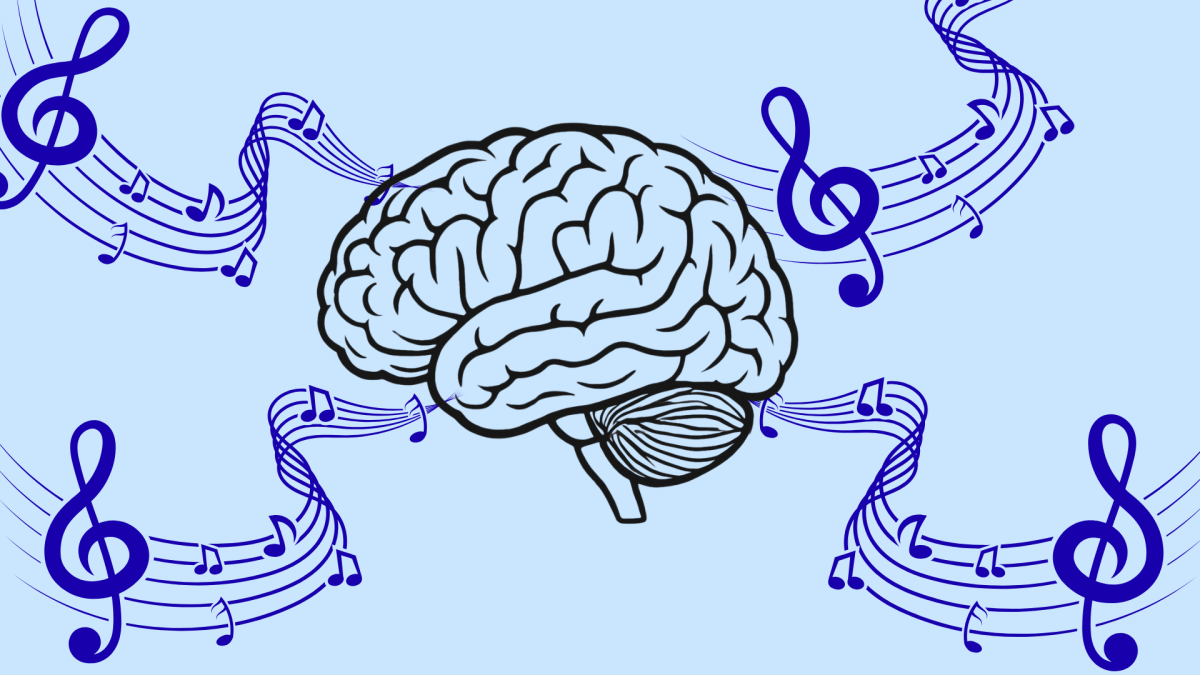
Without realizing it, the music we listen to today will stick with us forever, shaping our memories, emotions, and the way we react within daily life.
The Reminiscence Bump defines the tendency for adults over the age of 40 to attach their strongest, most vivid memories to the music they listened to within their teens. Due to the brain’s high sensitivity and development during ages 15-25, the brain links music to emotional intensity as a way to develop.
This formative period of the brain intertwines specific memories, experiences, and emotions to certain songs. Creating a disproportionate power in the way that the brain identifies memory and emotion. This effect correlates memory with music, transforming the mind back into a vivid memory, despite the amount of time that has passed.
Music activates multiple muscles and regions of the brain simultaneously, creating a stimulus of entertainment, emotion, and an increased dopamine release. Furthermore, songs are a way that the brain encodes memories, when that song is played, it acts as a cue, activating the brain and unlocking that specific experience.
During these highly sensitive years, the brain is hyper active, encoding little interactions, larger emotions, and experiencing first time events on a wider and more prominent scale. This time in life is when social and emotional intensity is at its highest, and listening to that music years after the experiences occur can trigger that sense of nostalgia.
In multiple studies, dementia patients have exhibited strong emotional memories when playing music from their teen years, illustrating greater communication, engagement, and improved mood.
Unbeknownst to many, the music we listen to also has a huge impact on mood, brain function, and the attitude we carry throughout our life.
Listening to music with positive themes can trick your brain into thinking that same way. Themes of love, joy, power, and empathy within music wire your brain to look for that in daily life. Look for the joy, find the joy. That’s the message your brain acts on when listening to positive messages in music.
Conversely, listening to music with negative themes can have the opposite effect on your brain, bringing down mood, inviting negative thoughts, and leading to an increase in cortisol levels.
“Music is so influential to the brain that the type of music you listen to actually has the ability to change the way you think and look at the world,” said The Minds Journal.
The music we listen to is more than a playlist, it shapes who we are, helps us grow, and develops our brain in a way that has continuous effects throughout our lives.